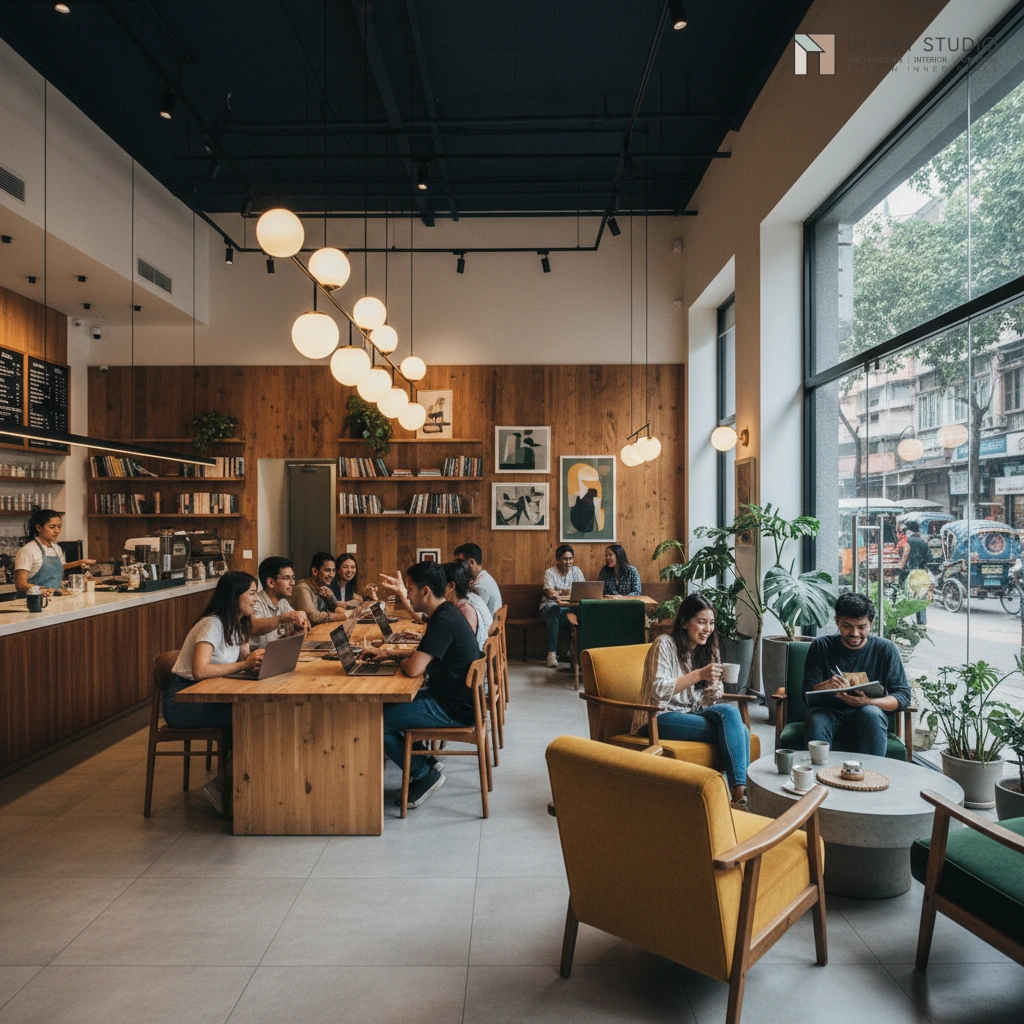

When you walk into a bustling city cafe, what do you see? It’s more than just tables and chairs. You see students collaborating, friends catching up, and entrepreneurs drafting their next big idea. The space itself, with its lighting, layout, and ambiance, encourages these moments. This invisible influence is the core of our discussion. It highlights the profound role of interior design in building urban culture.
We often think of culture as something grand, forged in museums, monuments, and historical events. But the true, living culture of a city is built every day in its indoor spaces. It’s shaped by the coffee shops where communities form, the offices where new ideas are born, and the public lobbies where strangers connect. Interior design is the silent architect of these daily experiences, quietly shaping how we live, work, and interact. This is the macro-impact of interior design in Bangladesh.
Beyond Walls: Public Interiors as Social Hubs
Cities are made of more than just streets and buildings; they are made of people and connections. For these connections to happen, we need spaces that are not home and not work. Sociologist Ray Oldenburg called these “third places.” These are the anchors of community life, such as cafes, libraries, bookshops, and public lounges. They are essential for a healthy civil society and a vibrant urban culture.
The design of these third places is critical. A welcoming, comfortable, and accessible interior invites people to linger, to talk, and to feel part of a community. This is where you see the direct impact of public spaces on community building. A well-designed space makes people feel they belong, fostering a sense of shared ownership and local pride.
These hubs act as the city’s living rooms. They are where social bonds are strengthened and where the informal exchange of ideas takes place. When interior designers create these spaces, they are not just arranging furniture. They are setting the stage for community life to unfold, which is a fundamental aspect of shaping a city’s cultural fabric.
Designing for Connection: Interior Design and Social Interaction
The way an interior is designed has a direct and powerful effect on how people behave within it. The choices a designer makes can either encourage or discourage social connection. This is the essence of understanding interior design and social interaction. A space can be deliberately crafted to bring people together or to provide solitude.
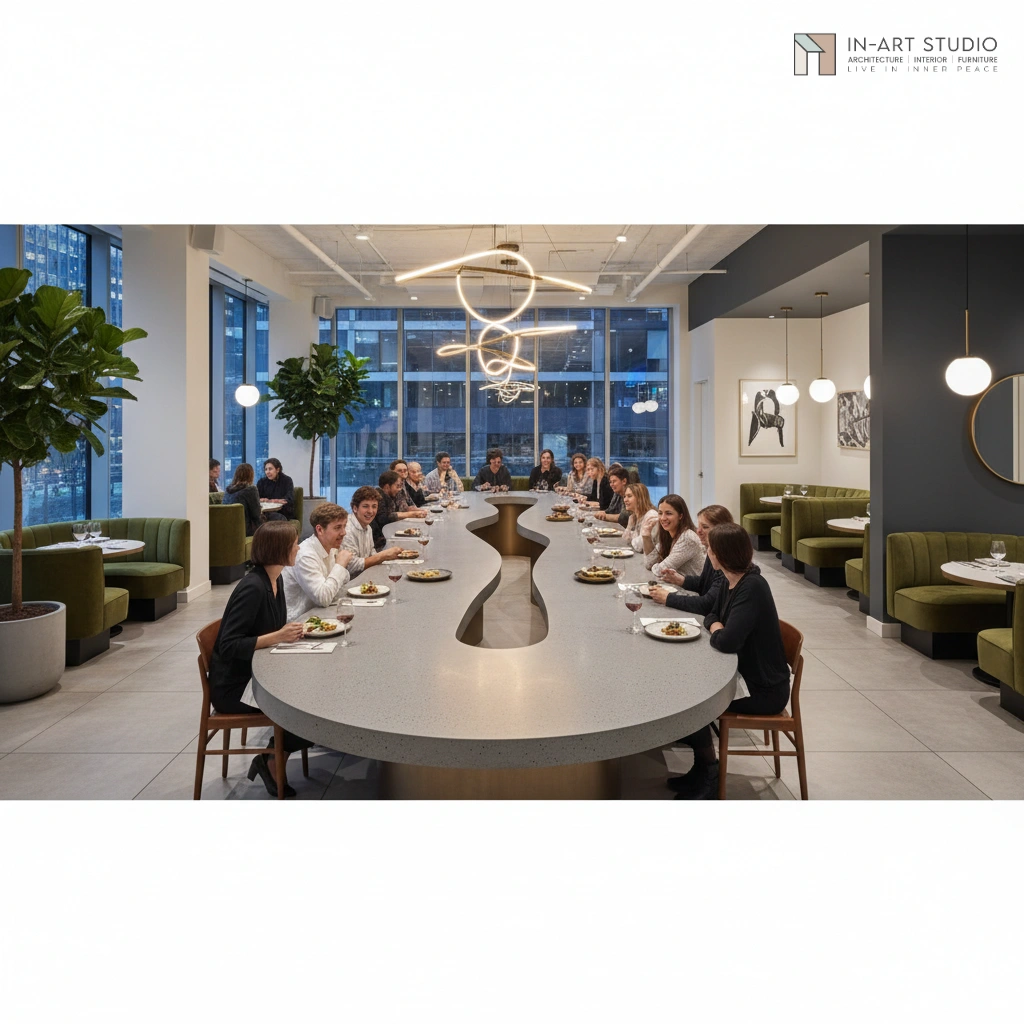
Consider the simple example of seating. A cafe filled with small, two-person tables creates an atmosphere of privacy and quiet conversation. In contrast, a cafe with large, communal tables invites strangers to sit near each other. This simple design choice can spark new conversations and connections, fostering a more open and collaborative micro-culture. It’s a key consideration in modern dining space interior design ideas.
Lighting, acoustics, and flow also play significant roles. Soft, warm lighting can make a space feel intimate and encourage longer stays. Good acoustics that dampen excessive noise allow for comfortable conversation. An open layout with clear pathways encourages movement and mingling. Each element is a tool a designer uses to influence the social dynamics of a space.
The Rise of the “Experience Economy”
In today’s cities, many businesses are no longer just selling a product; they are selling an experience. This shift is one of the most significant commercial interior design trends. People visit a restaurant not just for the food, but for the ambiance. They choose a retail store not just for its products, but for the feeling they get when they are inside it.
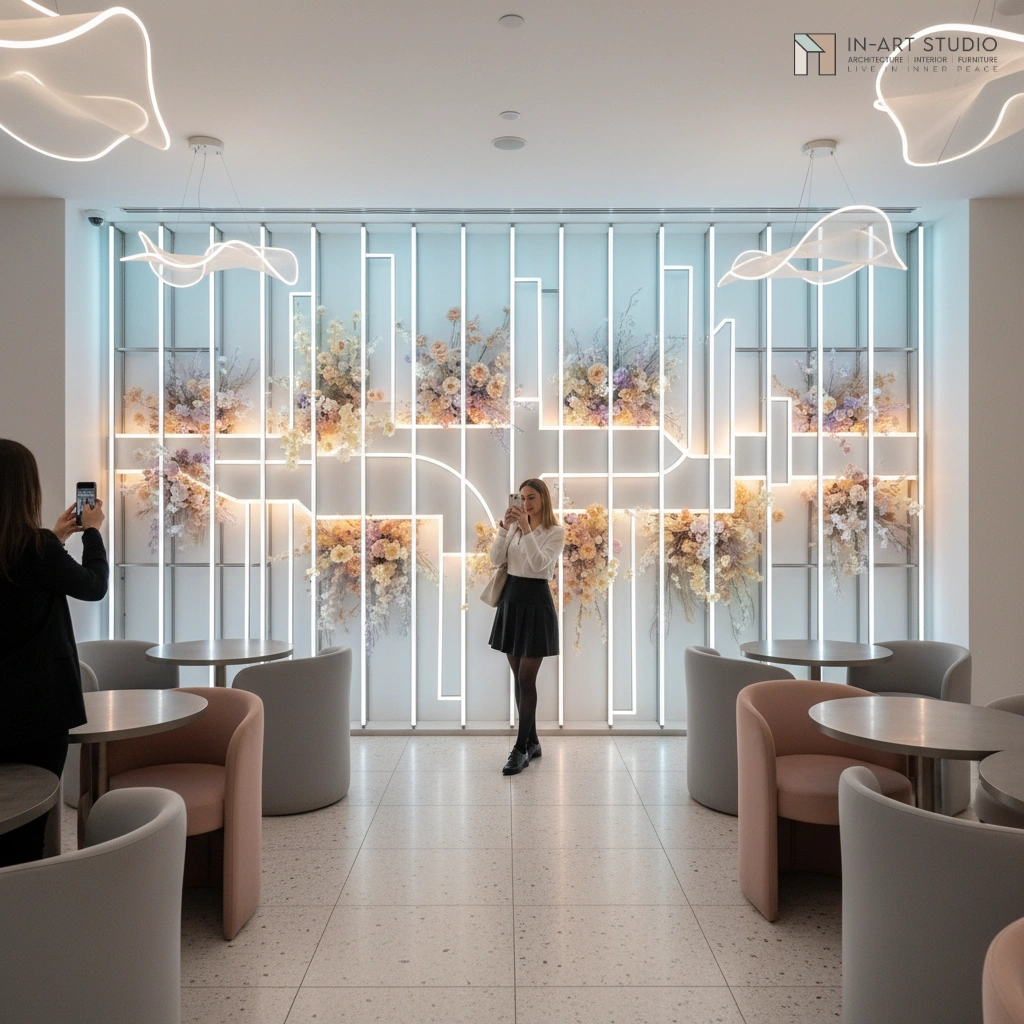
This “experience economy” places immense pressure on interior design to be creative and memorable. Designers are tasked with creating “Instagrammable” moments, unique, visually appealing features that patrons will want to photograph and share. This turns customers into organic marketers and embeds the business into the city’s social media landscape.
These meticulously crafted experiences contribute directly to urban culture. They become the backdrops for social gatherings, celebrations, and daily rituals. A city’s collection of unique, experience-driven interiors helps define its character. It’s what makes the social scene in one city feel distinctly different from another.
Co-working Spaces: Designing a New Work Culture
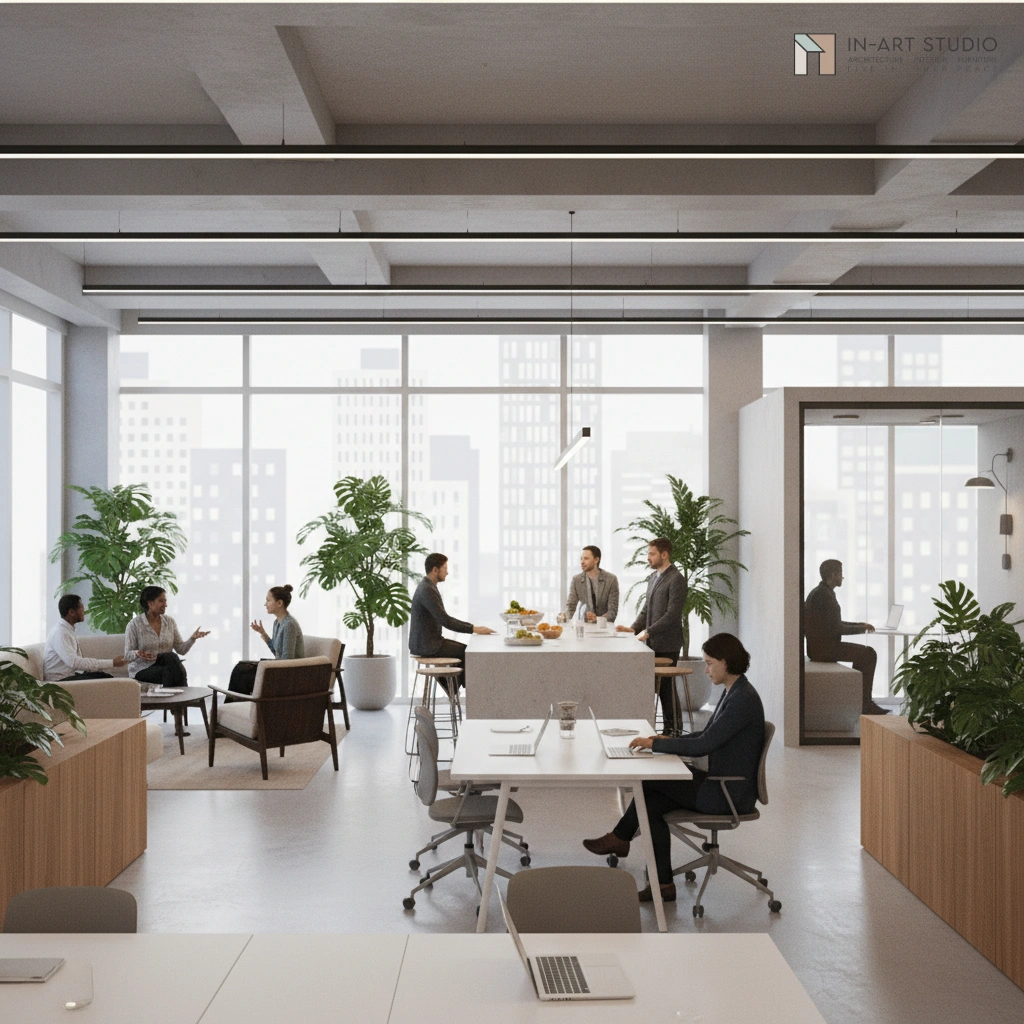
Nowhere is the culture-building power of interior design more evident than in the rise of co-working spaces. These are not just shared offices; they are ecosystems designed to foster a specific professional culture. They are built on the values of collaboration, community, and flexibility, and the design reflects this at every turn.
The layout of a co-working space is intentionally varied. It includes open-plan desks for collaboration, quiet pods for focused work, comfortable lounges for networking, and communal kitchens for informal chats. This variety allows individuals to choose the environment that best suits their task, promoting a more dynamic and less rigid way of working.
This design philosophy has had a huge impact on public spaces on the community within the professional world. It has helped to break down traditional corporate hierarchies. It has created a fertile ground for freelancers, startups, and remote workers to connect and innovate. The interior design of these spaces is actively building the future of work culture in our cities. Firms like In Art Studio, known for their holistic approach, are at the forefront of designing these new professional ecosystems.
A City’s Signature: Expressing Cultural Identity in Design
Just as people have unique personalities, cities have unique cultures. A key role of interior design is to reflect and reinforce this local identity. This is achieved by creating spaces that feel authentic and connected to their specific location. The thoughtful expression of cultural identity in design is what gives a city its soul.
This can be done by incorporating local materials, such as native woods or stones. It can be achieved by commissioning and displaying art from local artists. It can also be reflected in the color palettes, patterns, and motifs that are drawn from the region’s history and traditions. These elements make a space feel like it truly belongs to its city.
When designers prioritize local identity, they push back against the homogenizing force of globalization. They create spaces that are not just generic copies of trends seen elsewhere. Instead, they contribute to a city’s unique aesthetic and cultural narrative, making it a more interesting and diverse place to live and visit.
Global Trends, Local Flavors
Today, design ideas spread across the globe in an instant. We see trends like Scandinavian minimalism or industrial chic appearing in cities everywhere, from New York to Dhaka. The challenge and opportunity for the best interior design company in Dhaka lies in adapting these global trends to a local context. This fusion is where a truly modern urban culture is born.
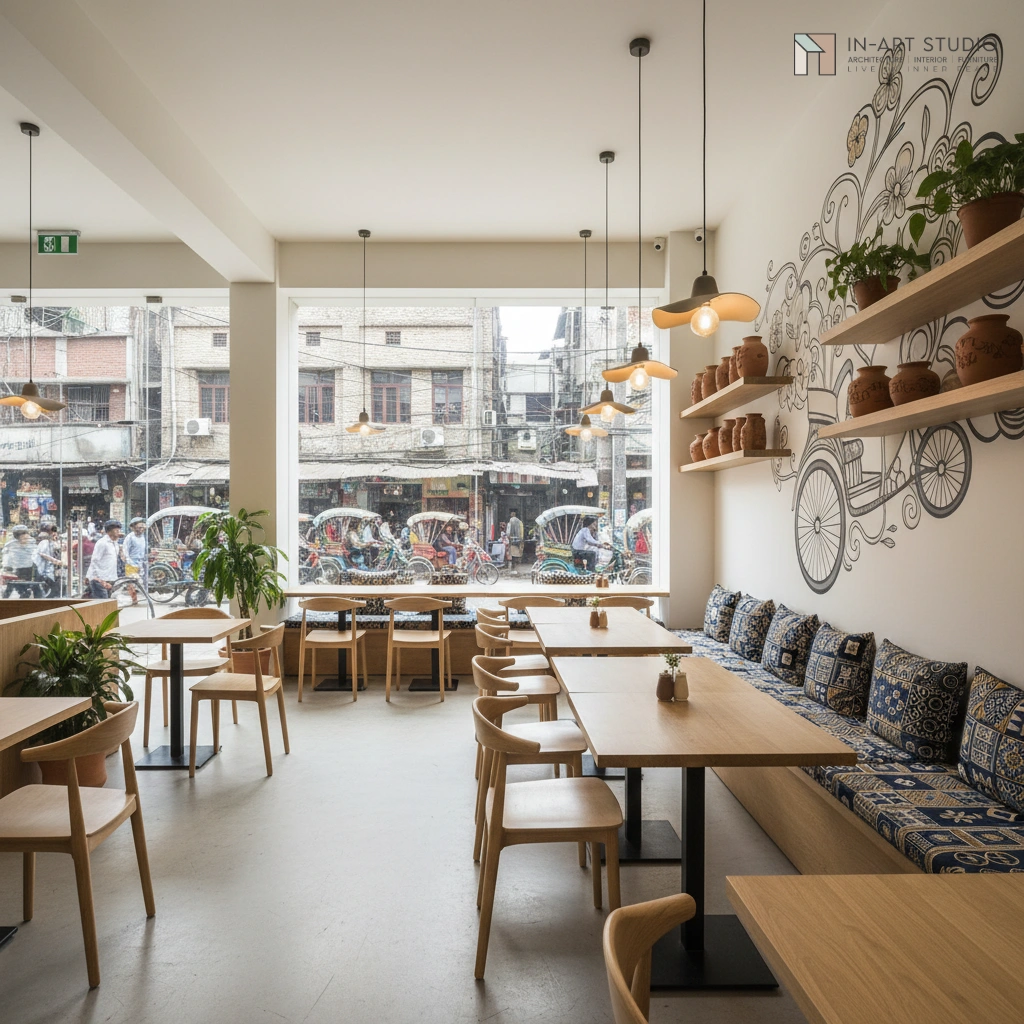
For instance, a cafe in Bangladesh might adopt a minimalist layout but use locally made cane furniture instead of imported pieces. It might feature traditional Jamdani patterns in its upholstery or display rickshaw art on its walls. This is true for projects in all neighborhoods, from upscale cafes to new ventures seeking a smart interior design company in Paltan.
This thoughtful adaptation is crucial for maintaining cultural identity in design. It prevents a city’s interiors from becoming a monotonous collection of international styles. It ensures that as a city modernizes, it doesn’t lose its unique character. It’s a delicate balance of looking outward for inspiration while staying grounded in one’s own heritage.
Summary: The Architect of Urban Experience
The role of interior design in building urban culture is both subtle and immense. The character of a city is not just defined by its skyline, but by the millions of daily interactions that happen within its walls. Interior designers are the architects of the environments where these interactions take place, making them key players in the creation of culture. This is why the search for the best interior design company near me is often a search for a community-builder, not just a decorator.
From fostering community in “third places” to shaping new professional norms in co-working spaces, design actively influences our social lives. It helps express a city’s unique identity and creates memorable experiences that define its vibe. By understanding the powerful link between interior design and social interaction, we can appreciate our indoor environments as dynamic engines of urban life. This is a responsibility that the top 10 Interior Design Companies in Bangladesh are increasingly embracing. This is a mission that the best interior design company in Bangladesh takes seriously, understanding its role in shaping the nation’s cultural future.
Every time a new cafe, office, or public lobby is designed, a small piece of the city’s future culture is being written. These spaces collectively shape our habits, our relationships, and our sense of belonging. They prove that the most profound cultural shifts often begin not on a grand stage, but within the simple, thoughtful design of a room. This is the power of great interior design in Bangladesh, whether it is a small budget project or a large duplex interior design in Bangladesh.
Frequently Asked Questions (FAQ)
Q: What is “urban culture”?
A: Urban culture refers to the collective way of life, beliefs, arts, and social behaviors of people living in a city. It is shaped by the density and diversity of the population and manifests in the city’s music, food, fashion, social norms, and the way people use public and private spaces.
Q: How does interior design affect our mood and behavior?
A: Interior design affects us through elements like color, light, space, and texture. For example, blue and green tones can have a calming effect, while bright lighting can increase energy and focus. Open, uncluttered spaces can reduce stress, while crowded layouts can increase it. This field of study is known as environmental psychology. This applies to public spaces as well as private living space interior design.
Q: What is a “third place” and why is it important?
A: Coined by sociologist Ray Oldenburg, a “third place” is a public setting separate from the two usual social environments of home (“first place”) and work (“second place”). Examples include cafes, libraries, and parks. They are important because they foster a sense of community, promote social interaction, and provide a space for civil discourse and new ideas.
Q: How can interior design promote inclusivity in a city?
A: Interior design can promote inclusivity by adhering to principles of universal design, ensuring spaces are accessible to people with disabilities. It can also create welcoming environments for diverse cultural and socioeconomic groups by using culturally sensitive decor, providing multi-functional spaces, and ensuring affordability, key to budget-friendly interior design, and accessibility in public venues. This is a challenge in public venues just as it is in private apartment interior design in Dhaka.